

Not just a daycare.
A day designed around your dog.
At Hounds of Strath, we believe the bar for dog daycare should be higher. Not just a yard where dogs pass thetime — but a structured, thoughtful environment where every dog is known, matched, and genuinely cared for.
This Page outlines who we are, how we operate, and the standards we hold. We think you deserve the full picture before you trust us with your dog.
Our Environment:
Three Zones, One Purpose
Our facility is built around three distinct spaces. Dogs move between them throughout the day based on
what they need — not a fixed timetable. This is the cornerstone of how we operate.
🌿 The Garden
🛋 The Lounge
🔕 The Quiet Dens
Active outdoor play. Structure groups matched by temperament and energy — not just size.
Private enclosed pens for a full reset. Used proactively — a sign we're reading your dog correctly.
Indoor calm retreat. Balanced rest between play — essential for a well-rounded, happy day.
Why does this matter?
A dog who plays hard for six hours without a structured break doesn't come home tired — they come home over-stimulated, irritable, and sometimes reactive. Building rest into the rhythm of the day isn't luxury; it's responsible care. The Lounge and the Quiet Dens exist so your dog's day has shape, not just duration.
How we match your dog.
Every dog who joins Hounds of Strath goes through a mandatory behavioural assessment before entering the general population. We introduce them to the environment, one calm dog, then a small compatible group — all under close observation from a senior staff member.
We're not looking for a perfect dog. We're looking to understand who your dog is, so we can create the right day for them.

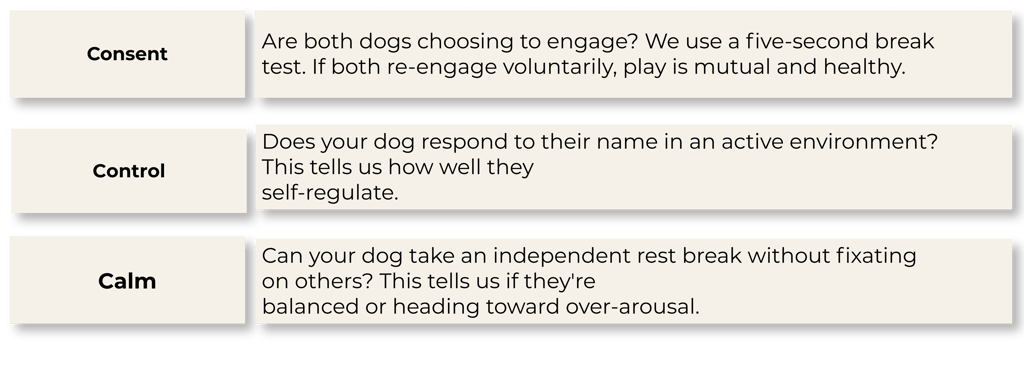
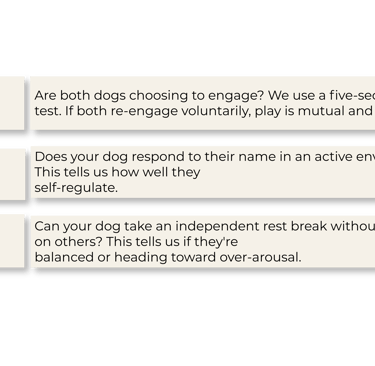
Our team doesn't just assess your dog at drop-off. These three principles guide how we read every dog, every hour of the day:
The Three C's — How We Observe All Day


Enhanced Monitoring — Certain Breeds
We welcome all breeds. Some dogs — herding breeds prone to 'policing', high-prey-drive dogs, guarding breeds, physically intense bully breeds, and high-arousal dogs with poor social signal reading — go through a structured three-day trial with written observations after each session. This isn't a barrier; it's the most respectful introduction we can offer a dog whose instincts are strong.
Behavioural Standards — What We Address
Most daycares manage the obvious behaviours. We go further. Below are the patterns we actively monitor and address — including ones many facilities quietly ignore.
The Barking Policy
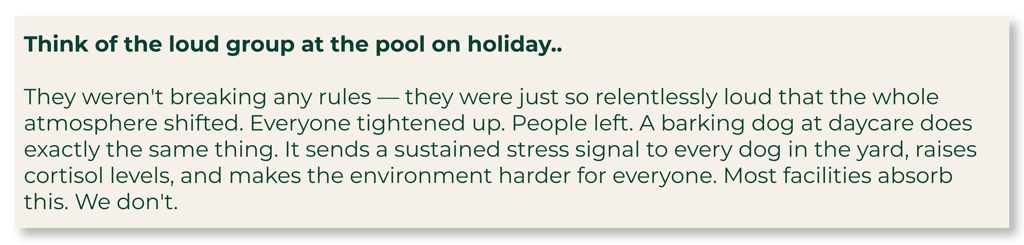
What We Mean by 'Persistent Barking'
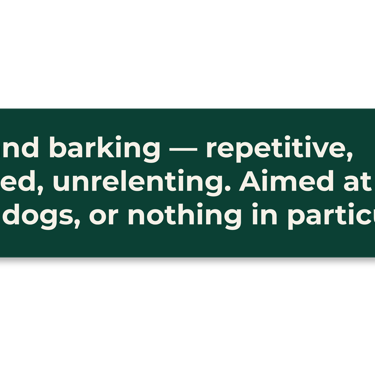
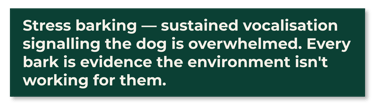
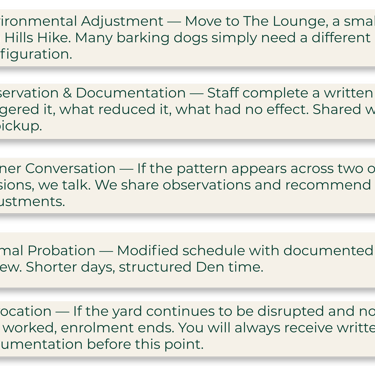
We are not a no-bark facility. A single alarm bark, brief vocalisation during play — that's normal dog communication. We're talking about:
If any of these patterns persist for more than 10–15 continuous minutes, or recur throughout the day despite intervention, it is logged and the response framework below applies.




Other Behaviours
We Don't Let Slide
These are the patterns that create quiet, compounding stress in a group environment — the ones that rarely appear on incident reports, but that we address every time they appear.
Mounting & Humping Widely misread as sexual — in a daycare context this is almost always stress or dominance. A single instance is redirected immediately. A repeated pattern within a session triggers a formal conversation.
Space Invasion & Body-Blocking Hovering, following too closely, or standing over resting dogs creates sustained low-level stress for the dog being targeted. We intervene before threshold is reached.
Resource Fixation Monopolising the water bowl, a corner, or a toy can signal early-stage resource guarding. We identify it early and have the honest conversation before it becomes an incident
Pestering Disinterested Dogs A dog who cannot read social 'no' — following, re-engaging after calming signals, escalating — is one of the most common causes of conflict in daycare. We intervene on behalf of the dog being ignored, every time.
Fence-Running Repetitive perimeter running is sustained over-arousal that is highly contagious and often leads to redirected aggression. Managed with environmental interruption first, then the Quiet Dens.
Separation-Triggered Disruption Some dogs struggle with moments of separation mid-day. These dogs are welcome, but require a structured acclimatisation approach during their Paws-port month.
1
2
3
4
5
6
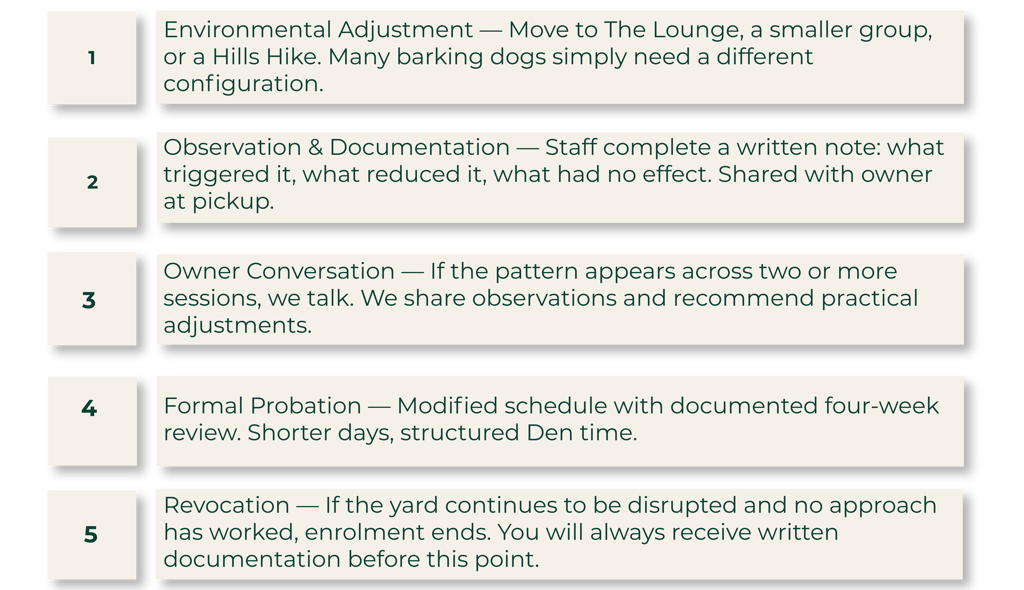
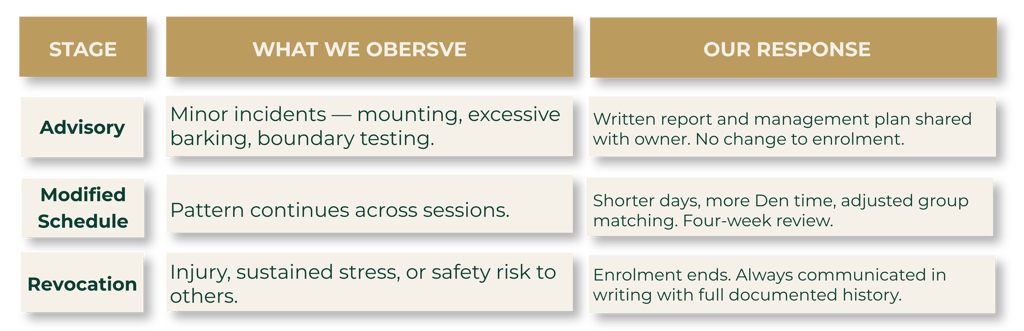
Our Behavioural Response Framework
Transparency is the foundation of trust. Every behavioural response at Hounds of Strath follows a documented, progressive approach. You will never receive a surprise.
'Not a daycare dog' does not mean 'bad dog.'
If, after everything we try, the environment isn't right for your dog — we'll tell you, and we'll help you find what is. We would rather lose a booking than leave a dog in the wrong place.